Sunday, May 16, 2010

Vegetable Garden Update

An update on the status of my vegetables:

My garden has an infestation of lubbers of all sizes and stages. This one is one of the largest so far this season. It was probably 2 1/2 - 3 inches.


So, of course, I've worried about my plants. So far, there haven't been any signs of trouble, but today I noticed a couple of holes in one leaf.

Perhaps this can be attributed to the lubbers, but maybe it is something else. It's actually become a daily thing for me to go to water the garden in the morning, and have a couple of lubbers running away from my garden-- but I've never seen them *in* the garden. Then the other day I found four or five of them around the compost bin, which is located near the garden. So I have to wonder whether it is actually the compost that attracts the lubbers, and not my garden after all.

I potted a couple of red bell pepper plants recently. Within a couple of days, I noticed one of them had wilted.

I figured maybe I didn't pot it well, and left some "empty space" around the root ball. Then Saturday I forgot to water the garden before we headed out to do some things, and by the time I watered it late in the afternoon, I found my potted plants had all wilted. So far, the other red bell pepper hasn't revived. So I may have lost them both. Dang it!


My roma tomato is doing great! It keeps growing by leaps and bounds, and there are blossoms everywhere!


I have one little pepper on my old plant from last summer.


If memory serves me, this is a yellow bell pepper.

My catnip is gone. Whatever got at it (presumably a neighboring cat?) completely destroyed it.

I have a couple of strawberries, and a couple more blossoms on my old strawberry plants from last year.

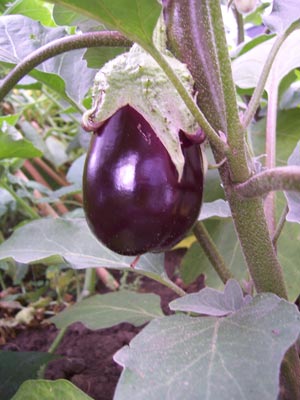
I have my first eggplant bloom...

...and a number of future eggplant blossoms just waiting. We'll see what happens with them. I was told that you need two plants to get fruiting. So that's what I did.

I have my first cucumber blossom...

...and a number of zucchini blossoms coming in.

Here is a shot of the cucumber in front, with the watermelon and zucchini behind.

And here we have the three peppers (poblano, jalapeno and green bell pepper) in front, with the cantaloupe in back on the left and one of the eggplants on the right.

These have all grown nicely since first planted a couple of weeks ago.

My cantaloupe is really doing well, with tons of blossoms...

And some of the peppers are about to blossom...

So far I've counted 3 mangoes on the tree. Small harvest this year, and they are all so high up I'll have to wait for them to fall on their own!

And what's this? A lone cauliflower plant that survived from last summer. After I found out that cauliflower is almost impossible to bring to fruition this far south, I used most of the leaves in a sausage-potato soup.
So, for the most part, the veggies are doing quite well. My experimental test garden is going well so far!

Sunday, May 9, 2010

More veggies added!

Today I potted a couple more plants. I got a grape tomato plant...

...and two red bell pepper.

So I've now got a portion of the raised garden bed planted, as well as some buckets and pots.

When I moved one pot yesterday in order to get rid of the old plant from last year and repot it with the new tomato, I found a nest of carpenter ants underneath.
The resident lizards were very excited to see what I had uncovered for them! They moved on in for dinner! I posted video on my Weedy Garden blog regarding the ants. A little gross, but fascinating!

Friday, May 7, 2010

Catnip and Cantaloupes

I've got something sneaking into my garden at night-- perhaps a cat-- that is really enjoying the catnip I potted in my herb pot. I noticed the other day that two branches of catnip or snapped in half...

Today I noticed that my catnip burglar had even ripped off some leaves, leaving them chewed up around the herb pot (which is really a Lowe's bucket!)


Hmmmm. Maybe I'll figure out what it is one of these days.

I also noticed this morning that my cantaloupe is blooming...

If I can keep that up, and bring these to fruition (despite the 3 inch grasshopper that was walking away from my garden as I watered it this morning), then that right there is three cantaloupe (pronounced can-ta-lope-ehs in my house) that I can expect in the upcoming months!

Thursday, May 6, 2010

My First Vegetable Garden

Well, I've got me a little garden going! A few months ago, I mentioned that I was covering the raised bed with a tarp in hopes of killing the weeds and weed seeds. Well, it did a pretty good job. We scooped up the dead grass from the top of the bed and threw it in the compost heap and horticulture bin.


Then we scooped out a bunch of the top layer in a quarter section of the bed, so that I could plant a small vegetable garden. We mixed in compost, potting soil and top soil. I planted a poblano pepper, jalapeno pepper, green bell pepper, cucumber, watermelon, zucchini, 2 eggplant and cantaloupe.

So far, everything is looking good.

I also potted an herb bucket, and I planted a Rome tomato plant and sweet basil in another bucket.
My tomato is growing like gangbusters, and already has a small tomato coming in.


And there are tons of new blooms that foretell of more tomatoes to come.


I noticed the other day that the strawberry pot that I had last summer has a couple of plants still going in it, and one has even sprung up a couple of little strawberries.


I also had an old pepper plant from last year that I had given up on and forgotten over the winter, and just noticed the other day that it has 3 peppers coming in on it.


Even my mango tree is trying to put out a little something, despite the freezes that hit it hard this winter. I've spotted 3 small mangoes so far.

So that's my small attempt right now at growing my own food. I'm just sort of testing the waters right now. We'll see how it goes, and I'll share what I may learn.

Saturday, January 23, 2010

Have You Seen This?

Have you seen the movie Food, Inc.? Everyone should watch this movie! Amazing! You would not believe the corruption that fills our food industry. They have government in their pocket just the same as big tobacco. This movie made me madder and more determined than any movie within the last few years, and it reaffirmed once more why I dislike Monsanto so much.

If you have Netflix, please be sure to put this one on your list. Or just go to their official website to watch it...

Official Food, Inc. Movie Site - Hungry For Change? - Trailer and Photos

Friday, January 15, 2010

Stay Tuned

I know I've been dormant, but I should be out of hibernation eventually. I still haven't planted my vegetable garden, but hope to do so in a month or two. I still have a raised bed full of weeds and grass. However I hope soon to try a technique that involves covering the bed in plastic and leaving it to sit for six weeks or so in an attempt to create an environment that will kill most of the weed seeds in the soil of the bed.

Saturday, August 1, 2009

Did you know?...

Did you know that you apparently need TWO eggplant plants in order to produce? I've had an eggplant for awhile now, and while I get blooms nothing ever comes to fruition. However Tina from Garden Goose recently informed me that the problem is that I need a second plant. That's important to know. I'll know better next time.

Sunday, June 21, 2009

Top 10 Edibles for Florida

Here is a list of the top 10 edible plants to grow in Florida, as outlined in Sunset's Florida Top 10 Garden Guide. According to the zone map in the Sunset book, I live in zone 25, which is the warmest zone in Florida. Most of Florida is zone 26, with northern Florida mainly being zone 28.

Green and Lima Beans: Peak season is late winter through late fall in warmer areas of the state; May through October in cooler areas. Bush Blue Lake and Contender varieties are the two overall best bush beans for Florida's climate and soils. Others that grow well here are: Cherokee Was, October Glory, Purple Bush and Roma II. Fordhook 242 is the preferred lima for this area. The preferred pole beans are Kentucky Wonder (deemed the best snap variety), with Dade and Blue Lake as close seconds. Florida Butter is a good pole lima bean. Plant them with other warm-season vegetables, such as tomatoes, cantaloupe, collards, okra, eggplant, cucumbers and peppers.

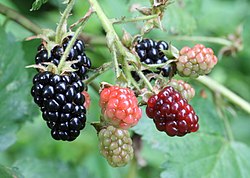
Blackberries: Peak season is May and June. Best thornless is Apache, Arapaho, and Navajo. Chester is cold hardy. Best thorny blackberry is Chicksaw. Plant blackberries towards the back of a vegetable garden, or wherever they have space. To expand your fresh fruit options consider combining blackberries with fruits such as peaches, nectarines, pears, blueberries, and grapes. (Not for zone 25)

Blueberries: Harvest season for rabbiteye blueberries extends May to July. The harvest season for highbush blueberries is April through May. Emerald is the best for areas from Ocala to Sebring. Jewel grows well in mild-winter regions. Millennia is one of the most widely-planted varieties in north-central Florida. Beckyblue, Bonita and Climax are three early-season "Rabbiteye" varieties. Equally good but later-ripening cultivars include Brightwell, Powderblue, Tifblue and Woodard. Blueberries are typically used in the landscape as hedges for screening, but can also be used in cluster plantings or as single specimens. (Not for zone 25)

Broccoli: Peak season is October through April, withstanding freezing down to 25 degrees. Favorite varieties for Florida include Waltham 29, Packman, Green Comet, Spartan Early, Atlantic, Green Sprouting, DeCicco, and Green Duke. Plant with other cold-tolerant vegetables, such as carrots, cauliflower, collards, onions, kohlrabi, and cabbage, and with herbs such as thyme, cilantro and rosemary.

Cabbage: Peak season is fall to spring. Best varieties are Chieftan Savoy, Copenhagen Early, Early Jersey Wakefield and Red Acre. Plant with other cold-tolerant vegetables such as kohlrabi, collards, onions, cauliflower, bok choi, mustard and carrots, and with herbs such as thyme and cilantro.

Lettuce: Peak season is fall to spring. Best butterhead is Buttercrunch, but other good choices are Deer's Tongue and Tom Thumb. Best head lettuce is Great Lakes. Best leaf lettuces are Black Seeded Simpson, Oak Leaf, Red Salad Bowl and Red Sails. Best romaine is Parris Island Cos, Valmaine and Dark Green Cos. Grow lettuce with cool-weather vegetables, such as carrots, broccoli, turnips, mustard, collards, kohlrabi, onions, cauliflower and cabbage.

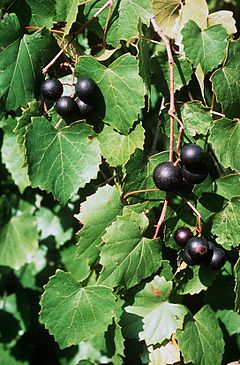
Muscadine Grapes: Peak season is fall. Fry is a bronze grape that is large and very sweet. Nesbitt is black, medium sized, and high-yielding. Southern Home is black-fruited. Summit is an outstanding bronze selection for the home garden. Plant grapevines with other fruits, including blueberries, blackberries, nectarines, plumes, peaches and pears. (Not for zone 25)


Onions: Peak season is spring. Lisbon is the best bunching onion for Florida, and Red Baron is a bright red. For bulbing onions, Candy is extra-sweet, Copra is the best storage onion, and Mars stores well and has a little color. Plant onions with other cool-weather vegetables, such as carrots, cauliflower, collards, kohlrabi and cabbage, and with herbs such as thyme and cilantro.

Strawberries: Peak season is spring. Florida 90 is an older variety, Florida Belle is good for its disease resistance, and Tioga is large and vigorous. Plant strawberries with other cold-hardy vegetables, including broccoli, cauliflower, cabbage, beets, Swiss chard, kohlrabi, lettuce and onions.

Tomatoes: Peak season is summer and fall. Best varieties include Better Boy, Bonnie Best (best in northern Florida), and Manalucie. Other large-fruited varieties are Floramerica, Celebrity and Flora-Dade. Other small-fruited varieties are Red Cherry, Sweet Chelsea, Sweet 100, Floragold, Patio and Roma. Plant tomatoes with other warm-season vegetables, such as beans, corn, cucumbers, eggplants, okra, peppers and squash.