Saturday, August 1, 2009

Did you know?...

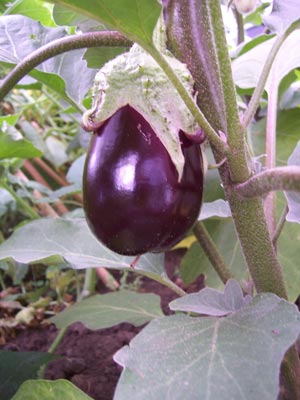
Did you know that you apparently need TWO eggplant plants in order to produce? I've had an eggplant for awhile now, and while I get blooms nothing ever comes to fruition. However Tina from Garden Goose recently informed me that the problem is that I need a second plant. That's important to know. I'll know better next time.

Sunday, June 21, 2009

Top 10 Edibles for Florida

Here is a list of the top 10 edible plants to grow in Florida, as outlined in Sunset's Florida Top 10 Garden Guide. According to the zone map in the Sunset book, I live in zone 25, which is the warmest zone in Florida. Most of Florida is zone 26, with northern Florida mainly being zone 28.

Green and Lima Beans: Peak season is late winter through late fall in warmer areas of the state; May through October in cooler areas. Bush Blue Lake and Contender varieties are the two overall best bush beans for Florida's climate and soils. Others that grow well here are: Cherokee Was, October Glory, Purple Bush and Roma II. Fordhook 242 is the preferred lima for this area. The preferred pole beans are Kentucky Wonder (deemed the best snap variety), with Dade and Blue Lake as close seconds. Florida Butter is a good pole lima bean. Plant them with other warm-season vegetables, such as tomatoes, cantaloupe, collards, okra, eggplant, cucumbers and peppers.

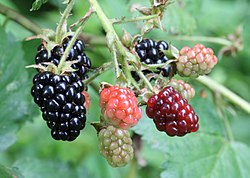
Blackberries: Peak season is May and June. Best thornless is Apache, Arapaho, and Navajo. Chester is cold hardy. Best thorny blackberry is Chicksaw. Plant blackberries towards the back of a vegetable garden, or wherever they have space. To expand your fresh fruit options consider combining blackberries with fruits such as peaches, nectarines, pears, blueberries, and grapes. (Not for zone 25)

Blueberries: Harvest season for rabbiteye blueberries extends May to July. The harvest season for highbush blueberries is April through May. Emerald is the best for areas from Ocala to Sebring. Jewel grows well in mild-winter regions. Millennia is one of the most widely-planted varieties in north-central Florida. Beckyblue, Bonita and Climax are three early-season "Rabbiteye" varieties. Equally good but later-ripening cultivars include Brightwell, Powderblue, Tifblue and Woodard. Blueberries are typically used in the landscape as hedges for screening, but can also be used in cluster plantings or as single specimens. (Not for zone 25)

Broccoli: Peak season is October through April, withstanding freezing down to 25 degrees. Favorite varieties for Florida include Waltham 29, Packman, Green Comet, Spartan Early, Atlantic, Green Sprouting, DeCicco, and Green Duke. Plant with other cold-tolerant vegetables, such as carrots, cauliflower, collards, onions, kohlrabi, and cabbage, and with herbs such as thyme, cilantro and rosemary.

Cabbage: Peak season is fall to spring. Best varieties are Chieftan Savoy, Copenhagen Early, Early Jersey Wakefield and Red Acre. Plant with other cold-tolerant vegetables such as kohlrabi, collards, onions, cauliflower, bok choi, mustard and carrots, and with herbs such as thyme and cilantro.

Lettuce: Peak season is fall to spring. Best butterhead is Buttercrunch, but other good choices are Deer's Tongue and Tom Thumb. Best head lettuce is Great Lakes. Best leaf lettuces are Black Seeded Simpson, Oak Leaf, Red Salad Bowl and Red Sails. Best romaine is Parris Island Cos, Valmaine and Dark Green Cos. Grow lettuce with cool-weather vegetables, such as carrots, broccoli, turnips, mustard, collards, kohlrabi, onions, cauliflower and cabbage.

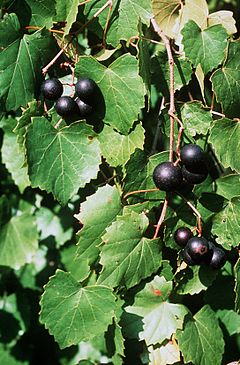
Muscadine Grapes: Peak season is fall. Fry is a bronze grape that is large and very sweet. Nesbitt is black, medium sized, and high-yielding. Southern Home is black-fruited. Summit is an outstanding bronze selection for the home garden. Plant grapevines with other fruits, including blueberries, blackberries, nectarines, plumes, peaches and pears. (Not for zone 25)


Onions: Peak season is spring. Lisbon is the best bunching onion for Florida, and Red Baron is a bright red. For bulbing onions, Candy is extra-sweet, Copra is the best storage onion, and Mars stores well and has a little color. Plant onions with other cool-weather vegetables, such as carrots, cauliflower, collards, kohlrabi and cabbage, and with herbs such as thyme and cilantro.

Strawberries: Peak season is spring. Florida 90 is an older variety, Florida Belle is good for its disease resistance, and Tioga is large and vigorous. Plant strawberries with other cold-hardy vegetables, including broccoli, cauliflower, cabbage, beets, Swiss chard, kohlrabi, lettuce and onions.

Tomatoes: Peak season is summer and fall. Best varieties include Better Boy, Bonnie Best (best in northern Florida), and Manalucie. Other large-fruited varieties are Floramerica, Celebrity and Flora-Dade. Other small-fruited varieties are Red Cherry, Sweet Chelsea, Sweet 100, Floragold, Patio and Roma. Plant tomatoes with other warm-season vegetables, such as beans, corn, cucumbers, eggplants, okra, peppers and squash.
Saturday, May 23, 2009

Top 10 Fruit Trees for Florida

According to Sunset's Florida Top 10 Garden Guide, these are the top 10 fruit trees for Florida:

Banana (Musa)


Carambola, Star Fruit (Averrhoa carambola)


Citrus (Citrus)


Fig(Ficus carica)-- Not for zone 25, where I live


Jaboticaba (Myrciaria cauliflora)


Loquat (Eriobotrya japonica)


Mango (Mangifera indica)


Papaya (Carica papaya)


Persimmon (Diospyros kaki)-- not for zone 25, where I live


Sapodilla (Manikara zapota)

Thursday, May 21, 2009

Big Heirloom Seed Win

I won an awesome giveaway for heirloom seeds! I received the seed stash today, and can I just say WOW! Look at this haul:


Now just because I don't think that you can really appreciate from that image just how many packets there are, here they are.


There's pumpkin and eggplant and flowers...


...various kinds of peppers and some peas...


...okra, corn and tomato...


...all kinds of lettuce, including one called "Drunken Woman"...


...and tons of beans.


Is that an awesome haul, or what? I can't wait to try my hand at growing some of these puppies come fall/spring. Maybe I can try some beans this summer.

Thanks again to Tina of the Victory Garden!

Monday, May 18, 2009

The World According to Monsanto

For anyone who is already familiar with the workings of Monsanto, or for those who are interested in learning how Monsanto is threatening our global food supply, check out these videos on Twilight Earth. No need for me to say anything further. These videos speak for themselves.

Saturday, May 9, 2009

Win Free Heirloom Seeds

Go to The Victory Gardener for your chance to win a bunch of heirloom seeds. Enter for your chance to win a variety of at least 20 different types of seeds from My Victory Garden etsy shop. Lettuce, beans, tomatoes, flowers-- all sorts of heirloom seeds. The giveaway runs through May 16th.

Wednesday, April 22, 2009

Happy Earth Day and a Great Giveaway!

Happy Earth Day to everyone! And in the spirit of being kinder to the earth, check out this giveaway! I've been thinking about how I could bike around more to avoid driving my car. But I've wondered how I would be able to get groceries on my current bike. Well this thing would be great for it!

It would also be great for going to the flea market or the farmer's market, or a local plant nursery. So many great uses for it!

What about you? What are you doing to try to be "kinder to the earth"?

Wednesday, March 25, 2009

A Seedless Future?

Am I the only person getting concerned with the possibility of our government controlling our food supply to the point of not allowing people to grow their own food, or licensing whether food is grown or not?

I've written on here about Monsanto and how they have patented seeds, so you cannot save seeds from produce grown from their patented seeds. So you have to basically "license" to use their seeds.

Last night my boyfriend went to the grocery store, and got some produce. First I learned of his seedless oranges that he'd bought, and there are seedless watermelons and grapes. Now last night he cut open a green pepper to find that it was seedless.

I understand that this started for reasons of convenience. It is so much nicer to eat a piece of watermelon and not have to spit out a ton of seeds in the process.

But is anyone else concerned of the potential abuses? Seeds patented, licensed and controlled. The inability to grow produce that contain seeds. The threat of having to continually pay for more seeds to continue growing produce? The threat to our right to just "grow". To lose our right to trade seeds, save seeds, to grow heirloom vegetables.

I'm really not a conspiracy theorist. Honest! I'm usually trying to be the "voice of reason" with my friends who ARE conspiracy theorists. But I'm just saying...

Is anyone else concerned?

Sunday, February 22, 2009

Florida Friendly Landscaping

I wrote last night on my Snoop Dogg blog about our day at the Burrowing Owl festival. There were lots of great vendors and display booths, and I learned a lot.

I've also written on my Weedy Garden blog about how I hope to xeriscape my yard and make it a water-friendly and environmentally friendly yard.

So the festival yesterday reminded me about my desires for my yard and garden. I was reminded how I hope to make my yard "Florida friendly", and that those same principles apply pretty much everywhere. So I thought that I would take a moment to share those principles.

There are nine principles to Florida-Friendly Yards and Neighborhoods:
  • Right Plant, Right Place: Plants should be selected to suit a specific site, and should require minimal amounts of water, fertilizer and pesticides. Decide how the yard area will be used, and plant for that specific use and location, and the given environmental conditions.
  • Water Efficiently: Water only when your yard needs water. Efficient watering conserves water, and makes healthier and stronger plants with deeper roots. Don't cut grass too short. Leaving it longer allows it to hold more water, helps to shade the roots and creates deeper-growing roots.
  • Fertilize Appropriately: Less fertilization is often best. Over-fertilization can be hazardous to your yard and the surrounding environment.
  • Mulch: Maintaining a 3" layer of mulch will help retain soil moisture, keep the plants roots cool, prevent erosion and suppress weeds.
  • Attract Wildlife: Incorporate plants that provide food, water and shelter for wildlife.
  • Manage Yard Pests Responsibly: Use pesticides sparingly and wisely to protect people, animals, the environment, and beneficial insects.
  • Recycle: Grass clippings, leaves and yard trimmings should be recycled in your yard as compost or mulch to add nutrients to the soil and reduce waste disposal.
  • Reduce Stormwater Runoff: Water running off from your yard can carry pollutants such as soil, debris, fertilizer and pesticides into our water supply.
  • Protect the Waterfront: Waterfront property, whether on a bay, river, canal, stream or beach, is very fragile and should be carefully protected to maintain our freshwater and marine ecosystems.

So how do you incorporate all of these principles into your yard? What exactly can you do? Here are some ideas:
  • Buy or build a compost bin.
  • Create a wildlife habitat. This can be as simple as putting around shrubs to offer shelter and cover for small birds and animals, planting food plants like Barbados Cherry, providing bird baths and ponds for water sources, and housing like bird houses, bat houses and toad homes.
  • Make your yard practical and useable.
  • If you live on the beach, create a buffer between your yard and the shoreline.
  • Use trees to shade the southern and western sides of your home.
  • Mulch your plant beds.
  • Use a rain barrel.
  • Use swales to keep rainwater where it falls.
  • Use porous surfaces, such as brick driveways and mulch paths, to allow water to soak into the ground instead of runoff.
  • Protect butterfly larvae (aka caterpillars) and provide them with the food and shelter that they need. Not only do butterflies add beauty and interest to the yard, but they also are great pollinators.
  • Learn about the insects in your yards, so that you can distinguish the good from the bad. The fact is, less than 1% of all insects are harmful.
  • When you determine that you do have an insect problem, first try non-chemical approaches. Then try the safest pesticides possible, such as insecticidal soaps, horticultural oils and Bt products. Also choose to spot-treat instead of broad treatment, and learn to be tolerant of small amounts of damage. Learn to love seeing the chewed leaves that are evidence of caterpillars and the fact that your garden is working as it should be!
  • Recyle yard waste. Leave grass clippings on the lawn or in the compost bin. Use fallen leaves and pine needles as mulch under trees and shrubs.
  • Use native plants in your landscaping, and get rid of exotic invasives.
  • Replace sod with more environmentally-friendly ground covers like sunshine mimosa, perennial peanut, blue porterweed, pennyroyal or Creeping Charlie.

Check out www.floridayards.org for more information and ideas. You can also try to attend one of the Introductory FYN classes that are periodically held. The next one in Lee County will be March 14th. The cost is $5, held at Rutenberg Park Eco-Living Center in Fort Myers, and you can register by calling 239-533-4327.

Friday, February 20, 2009

Mason Bee Hive Giveaway

There is a great little giveaway for gardeners going on over at GreenEarthJourney. They are giving away a Mason Bee Hive from Andrew's Reclaimed.

Awesome! I want my garden filled with bee hives and butterfly and toad homes and bat houses. Check it out!